e-mail
 English
 français
 Deutsch
 русский
 italiano
 español
 português
 العربية
 日本語
日本語 한국의
한국의 中文
中文


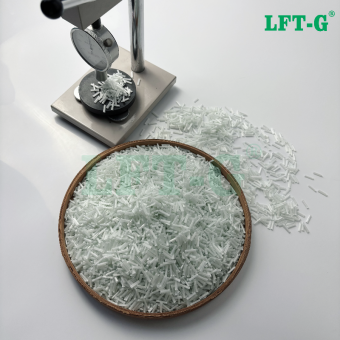
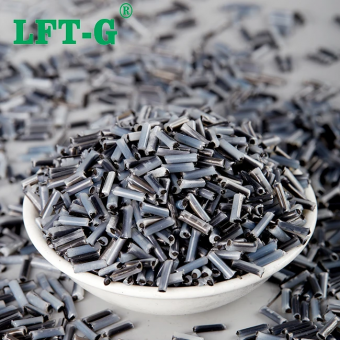
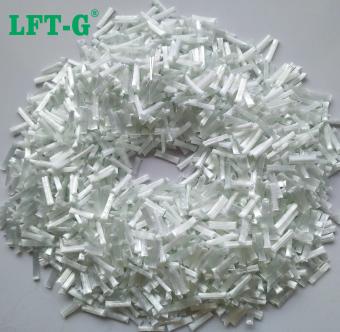
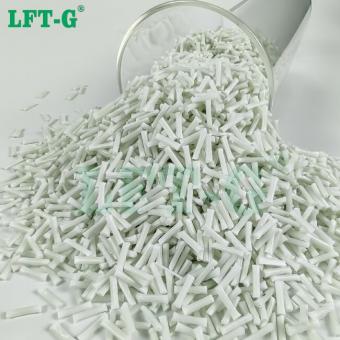

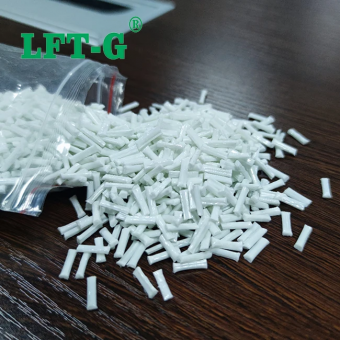
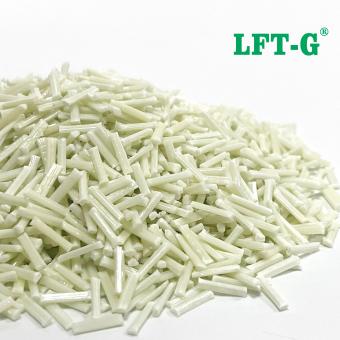
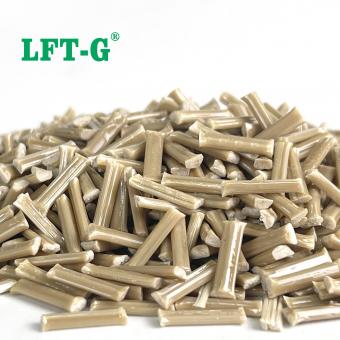
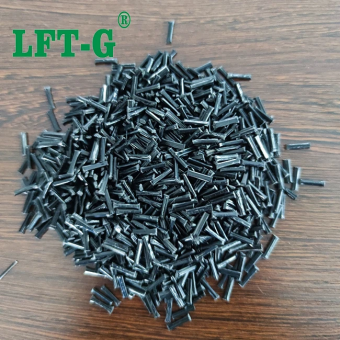
Long carbon fiber is a new material with high strength and high modulus and excellent mechanical properties. It is a microcrystalline graphite material obtained by carbonization and graphitization of organic fibers. Its specific gravity is less than 1/4 of steel, and its strength is higher than that of steel. Corrosion resistant, high modulus, no melting. And a variety of resin substrates after impregnation extrusion molding into pellets, long carbon fiber polymer. Can be used for direct molding products. In recent years, it has been widely used in aerospace, mechanical and electronic chemicals.
-
Xiamen PLA Polylactic Acid green materials can be recycled long carbon fiber reinforcedPLA (polylactic acid) is a semi-crystalline thermoplastic polyester. It is derived from renewable resources and is therefore classified as a bioplastic. PLA is usually made from plant starch. This origin eventually resulted in the two key monomers used in PLA synthesis - lactic acid and lactide. Each monomer can be used to produce PLA by a number of different processes. Low molecular weight PLA was first produced in 1932. In 1952, DuPont further developed the process and created the high molecular weight PLA. PLA is easy to print. It is biodegradable and therefore more environmentally friendly than ABS. The production of PLA also requires much less energy. Long Carbon Fiber Reinforced Thermoplastic LFT® is A LGF or LCF compound , through Centerfill manufacturing method which Offers exceptional Properties for weight and Cost reduction. With pellet length of 7-25mm and a range of 20%-70% of LGFor LCF content , LFT® Products family consist of Tailor made solutions to the Industry’s vast requirements , such as: · LFT® - Fulfills heat stability requirements. · LFT® - Offer Climate resistant Properties including UV resistance. · LFT® - Ultra Performance & safety , with exceptional impact resistance Features, especially at low temperatures. · LFT® - Cost Effective P.s. Centerfill manufacturing method:Centerfill uses our proprietary technology to introduce glass roving (GFR), which consists of several thousand filaments, into an impregnating device and melt the thermoplastic resin, uniformly impregnating between the filaments and then cutting them into pellets. Manufacture. How Does Composite Differ From Plastics? Plastic components are generally made from a single polymer injection, or sometimes a two-stage process that overmolds rubber onto a part for specific applications such as grip and seal. They are relatively easy to manufacture, generally involving a single-stage operation. Composites, on the other hand, are always two or more co-processed materials, achieving better properties than the individual components can deliver. They are also intrinsically more complex to manufacture. They generally require manual lay-up processes and tend to be much more expensive in labor terms than simple, automatable molding operation outputs. Composites are generally intrinsically stronger than equivalent plastic parts by a large factor. This allows composite parts to deliver higher strength and reduced weight, compared with a similar plastic component. Plastic parts are, in most regards, shape, and size unlimited. Composite parts are rarely used for very small components but can be very large, but they are quite restricted in the complexity of shapes and fine detail. Broadly, plastics are used for low-cost, high-volume applications, whereas composites are considerably more costly and are used for high-value and lower-volume tasks. Xiamen LFT Composite Plastic Co., Ltd. Xiamen LFT composite plastic Co., Ltd. was founded in 2009 by veterans of the thermoplastic-reinforced composite industry and is one of the global suppliers of long fiber reinforced thermoplastic materials, integrating research, production, and marketing of our own brand. Our products have passed the ISO9001&16949 system certification and have been awarded several national trademarks and patents. Our products can be used in the manufacture of home appliances, aerospace, automotive, military, electrical, and other components, as well as medical equipment, sporting goods, daily necessities, and other fields. The company has been adhering to the management belief of quality first, laying a solid foundation at home and abroad, and has been unanimously recognized by customers at home and abroad.
- PLA natural color virgin plastic
- quick and easy prototypes GFRP
- renewable sources
- 3d print plastic good appearance
- long fiber filled modified plastic
- China manufacturer made
Tags :
-
LFT-G High Quality Nylon Polyamide 6 Long Carbon Fiber Reinforced PlasticsPolyamide 6 Profile PA66+LGF60 Polytron A60N01 is Natural, 60% Long Glass Fiber Reinforced, Heat Stabilized POLYAMIDE 66, The Glass Fibers are Chemically Coupled to the Polymer Matrix, The material is supplied in pellets that are typically 12mm in length. Fiber length is the length of the pellets. Typical applications include Injection Molding Applications. Production Process of LGF 1. Through the physical and chemical treatment of the original carbon fiber, it removes impurities, improves surface activity, and provides the mechanical properties and durability of pre-soaked materials. 2. Add resin, additives, etc., form a unique formula. Improve flowability, hardness, temperature stability. 3. The pre-treated carbon fiber is placed on the machine, and the resin is evenly covered on its surface. 4. Use the machine to solidify the material, and the fiber and resin are both sufficiently bonded. 5. According to the requirements of the product, cutting particles. What are the advantages and applications of Polyamide 6? Nylon 6 fibers are tough, possessing high tensile strength, elasticity, and luster. The fibers can absorb up to 2.4% of water, although this lowers tensile strength. The glass transition temperature of nylon 6 is 47 °C. Nylon 6 is generally white as a synthetic fiber but can be dyed in a solution bath before production for different color results. The tenacity of nylon 6 is 6–8.5 gf/D with a density of 1.14 g/cm3. Its melting point is 215 °C and can protect heat up to 150 °C on average. The applications of nylon 6 include construction material in many industries, including the automotive industry, electronic and electrotechnical industry, aircraft industry, clothing industry, and medicine. The advantages of nylon 6 are that its fibers are wrinkleproof and highly resistant to abrasion and chemicals such as acids and alkalis. Long fiber reinforced thermoplastics are an excellent option to consider for metal replacement at a fraction of the weight. About Xiamen LFT laboratory Warehouse Xiamen LFT has capabilities to provide assistance to you throughout an entire product launch - through product discussion, performance analysis, composite selection, composite pellet production, after-sales tracking. In addition, we provide guidance on injection molding techniques
- PA6 GFRP engineering plastic
- Manufacturer directly sell good price plastic
- Thermoplastic resin modified polymers
- customization service
- car parts lightweight instead metal
- composites made in China high toughness
Tags :
-
LFT-G Polypropylene long carbon fiber filled PP high mechanical properties polymerWhat is Long carbon fiber (LCF) Carbon fiber was first used in aviation, military and other fields, and later was cited in the production of racing car parts. In recent years, it began to come into the consumer market, and is also one of the materials that international manufacturers are keen on. Carbon fiber composite materials are characterized by very light, rigid, and can withstand the same pressure as steel, the cost is higher. However, the material is more durable and has a high recycling value, so it can save costs to a certain extent. Carbon fiber composites include carbon fiber powders, short fibers, long fibers, and long fiber reinforced composites. Long carbon fiber composites have better mechanical properties than short carbon fiber composites, but there are certain requirements for the injection molding machine and mold of the product. Carbon fiber has excellent mechanical properties and chemical stability, lower density than aluminum, higher strength than steel, is the highest specific strength and highest specific modulus among the high-performance fibers that have been produced in large quantities, and has the characteristics of low density, corrosion resistance, high temperature resistance, friction resistance, fatigue resistance, high electrical and thermal conductivity, low coefficient of thermal and wet expansion, etc. It is an important strategic material for the development of national defense and national economy. The characteristics of corrosion resistance, high temperature resistance and low coefficient of expansion make it an alternative material to metal materials in harsh environments; the electrical and thermal conductivity properties expand its application in the field of communications and electronics; as the highest specific strength (strength to density) and highest specific stiffness (modulus to density) among the high-performance fibers currently in mass production, carbon fiber is an important material for aerospace, wind power blades, new energy vehicles, transportation, sports and leisure, etc, Carbon fiber is an ideal material for aerospace, wind power blades, new energy vehicles, transportation, sports and leisure, and other fields with light weight needs. Xiamen LGT-G LCF compounds have the following appearance: Flat grain, very light weight, shows flawless finish, no floating fibers, bubbles, etc. The color is natural black and the length is around 6 to 25 mm. The application of PP filling long carbon fiber compounds Datasheet for reference Homo-PP & Copo-PP PP is divided into homopolymer PP and copolymer PP according to the different types of monomers involved in polymerization. Homopolymer PP is made by polymerization of propylene monomer only, and there is only one kind of link in the polymer molecular chain, with high crystallinity and good mechanical properties and heat resistance. Copolymerized PP is mainly made of propylene monomer and ethylene monomer, and there are ethylene links in addition to propylene links in the polymer molecular chain, which has high impact resistance. HPP composites and CPP composites, both of them are available for us. Details Number Color Length Package Sample MOQ Port of Loading Delivery time HPP-NA-LCF Natural color, or customized 6-25mm 20kg/bag Available 20kg Xiamen Port 7-15 days after shipment Certifications Test Xiamen LFT composite plastic CO., Ltd. Xiamen LFT composite plastic Co., Ltd. is a brand-name company that focuses on LFT&LFRT. Long Glass Fiber Series (LGF) & Long Carbon Fiber Series (LCF). The company's thermoplastic LFT can be used for LFT-G injection molding and extrusion, and can also be used for LFT-D molding. It can be produced according to customer requirements: 5~25mm length. The company's long-fiber continuous infiltration reinforced thermoplastics have passed ISO9001&16949 system certification, and the products have obtained lots of national trademarks and patents. Please contact Ms. Wallis for more information. Email: sale02@lfrtplastic.com Whatsapp: (+86) 13950095727
- Long carbon fiber Reinforced Polypropylene for electrial accessories
- PP pellets lcf 30 polymer compounds resin
- best long carbon fiber pp lcf30 granules
- carbone fiber reinforced pp pellets
- pp lcf injection mold extrusion mold thermoplastic
- pp modified granules manufacturer
Tags :
-
Xiamen LFT Polyetheretherketone LCF composite high performance natural colorProduct grade: General grade Fiber specification: 20%-60% Product feature: Flame resistant, Heat resistant, Chemical resistant, Low friction coefficient, Good load bearing Product application: Aviation, Machinery, Electronics, Chemicals, Automotive, Other high-tech fields.
- Good load bearing polyetheretherketone
- Low friction coefficient made bu own factory
- Own factory made pure and virgin peek
- Wide useage peek industrial materials reinforced peek
- Customized materials peek toughness Carbon
- Long Glass Fiber can be recycled peek aerospace
Tags :
-
Xiamen LFT-G Polyphenyl Sulfide filled 20%-60% LCF PPS flame retardant grade UL-94 V0Polyphenylene sulfide is a new functional engineering plastic.
- Polyphenyl sulfide long carbon fibre
- PPS plastic rein forced compounds
- Composite material pps industrial use
- Filling lcf 30 pps composite plastic new materials
- High flame retardant car parts
- Factory use raw material modified plastic high performance
Tags :
-
LFT Polyamide 66 high performance long carbon fiber nylonPolyamide 66 roving carbon fiber Nylon black color with heat resistance
- Long carbon fiber enhance pellets
- Roving carbon fiber PA66 instead metal and steel
- Nylon66 composite granules for injection
- High quality PA66 long fiber composite、
- Polyamide long fiber composite
- Virgin plastic PA6 LCF40 for car parts
Tags :
-
LFT-G Polyamide 12 filled long carbon fiber plastic higher performance original colorPolyamide 12 material Polyamide (PA), commonly known as nylon, is a diverse group of polymers that are used as engineering plastics to replace metals to meet downstream industrial requirements for lightweight, low-cost products. The materials of the polyamide series exhibit resistance to high temperatures and electrical resistance. Due to their crystalline structure, they also show excellent chemical resistance. They have very good mechanical and barrier properties. In addition, these materials are very flame retardant. Polyamides were the first truly commercial synthetic fibers. When reinforced with carbon fibers (staple or long), their stiffness can compete with that of metals, which is why polyamides are often considered in metal replacement projects. Polyamides are widely used in the automotive, transportation, electronics, electrical, and consumer goods markets. Main properties of PA12: Excellent chemical resistance Low temperature impact resistance Aging resistance High temperature resistance Even if they do not excel in temperature resistance (HDT, peak temperature...) they show stable performance over time even if they do not excel in terms of temperature resistance (HDT, peak temperature...) Their excellent durability allows them to be used in a wide range of conditions (temperature, pressure, chemical ......) PA12 is particularly suitable for situations where long-term stability is required. Application More application fields you can contact us for technical advice. Details Number Color Length Sample Package MOQ Port of Loading Delivery time PA12-NA-LCF Natural color/Customized 6-25mm Available 20kg/bag 20kg Xiamen Port 7-45 days after shipment Produce processing Tests Contact us for more materials
- pa12 lcf pallets black
- Long carbon fiber Reinforced Polyamide12 for electrial accessories
- automotive parts materials PA12
- Low warpage electronic appliance
- thermoplastic resin pa12 with fiber
- Nylon 12 composite pellets Polymer granules
Tags :
-
Xiamen LFT Polypropylene filled Long Carbon Fiber modified plastic high strength and rigidityCarbon Fiber Reinforced Plastic Carbon fiber reinforced plastic composite (CFRP) is a lightweight, strong material that can be used to make a wide range of products used in everyday life. It is a term used to describe fiber reinforced composites with carbon fiber as the main structural component. Note that the "P" in CFRP can also stand for "plastic" rather than "polymer." Typically, CFRP composites use thermosetting resins such as epoxy, polyester, or vinyl esters. Despite the use of thermoplastic resins in CFRP composites, "carbon fiber reinforced thermoplastic composites" often uses its own acronym, CFRTP composites. LFT-G focuses on LFT&LFRT. Long Glass Fiber Series (LGF) & Long Carbon Fiber Series. Compared with Short Carbon Fiber, Long Carbon Fiber has more excellent performance in mechanical properties. It is more suitable for large products and structural parts. It has 1-3 times higher (toughness) than Short Carbon Fiber, and the tensile strength(strength and rigidity) is increased by 0.5-1 times. Properties of CFRP composites Composites reinforced with carbon fiber are different from other FRP composites that use traditional materials such as glass fiber or arylon fiber. Advantages of CFRP composites include: Light weight: Conventional fiberglass reinforced composites using continuous fiberglass and 70% fiberglass (glass weight/gross weight) typically have a density of 0.065 lb/cubic inch. A CFRP composite with the same 70% fiber weight might typically have a density of 0.055 lb/cubic inch. Increased strength: Carbon fiber composites not only weigh less, but CFRP composites are stronger and stiffer per unit weight. This is true when comparing carbon fiber composites to glass fibers, and even more so when comparing metals. For example, when comparing steel to CFRP composites, a good rule of thumb is that a carbon fiber structure of the same strength typically weighs 1/5 as steel. You can imagine why car companies are looking into using carbon fiber instead of steel. When comparing CFRP composites to aluminum (one of the lightest metals used), the standard assumption is that an aluminum structure of the same strength might weigh 1.5 times as much as a carbon fiber structure. Of course, there are many variables that can change this comparison. Grades and qualities of materials may vary, and for composites, the manufacturing process, fiber structure and quality need to be considered. Disadvantages of CFRP composites Cost: As amazing as the material is, there's a reason carbon fiber can't be used in every situation. Currently, the cost of CFRP composites is too high in many cases. Depending on current market conditions (supply and demand), the type of carbon fiber (aerospace grade versus commercial grade), and bundle size, carbon fiber prices can vary significantly. On a per-pound basis, carbon fiber can cost anywhere from five to 25 times more than fiberglass. The difference is even greater when comparing steel with CFRP composites. Electrical conductivity: This can be a plus or minus for carbon fiber composites, depending on the application. Carbon fiber is extremely conductive, while glass fiber is insulating. Many applications use fiberglass instead of carbon fiber or metal, strictly because of electrical conductivity. For example, in the utility industry, many products require the use of fiberglass. This is one of the reasons why the ladder uses fiberglass as the ladder rail. The chance of electric shock is much lower if the fiberglass ladder comes into contact with the power cord. The situation with CFRP ladders is different. Although the cost of CFRP composites remains high, new technological advances in manufacturing are continuing to provide more cost effective products. Application of PP-LCF Long Carbon Fiber as the reinforcement material of CFRP, its proportion is only 1/4 of iron, specific strength is 10 times that of iron, elastic modulus is 7 times that of iron, carbon fiber excellent physical properties are played in various fields from sports goods to aircraft. Details of product Number Length Color Sample Package Delivery time Port of Loading Freight PP-NA-LCF30 5-25mm Original color (can be customized) Available 20kg a bag 7-15days after shipment Xiamen Port Depending on your destination Related products PA6-LCF PA66-LCF About Xiamen LFT Composite plastic Co., Ltd. A new material enterprise that develops and produces its own brand of LFT long glass fiber and long carbon fiber. It fills the blank of domestic high-end long carbon fiber LFT materials, and is more customized and shortened the production cycle compared with foreign companies. In addition, our company has sales and service offices in Zhejiang, Jiangsu, Guangzhou, Chongqing, etc. ...
- Long fiber reinforced thermoplastics
- Modified materials of long carbon fiber
- Homopolymer long carbon fiber PP
- The modified PP high performance
- Long carbon fiber filling plastic PP car part use
- LFT-G brand materials pp polymer chemical resistance
Tags :
-
LFT Industrial Grade Polypropylene Long Carbon Fiber Reinforcement 20%-60%LFT Plastics are frequently used to replace metal for applications in which light weighting, improved impact strength, elastic modulus, and material strength are required.
- PP LCF CF compounds pellets granules
- Modified thermoplastic resin polymers
- easy to produce for car parts home appliance
- whole sell factory price 25kg/bag
- Low density and weight instead metal and steel
- can be customized plastic 10-12 mm length
Tags :
-
Xiamen LFT Polyamide 66 composite material long carbon fiber reinforced pelletsProduct number: PA66-NA-LCF50 Fiber specification: 20%-60% Product feature: High toughness, Light weight, High strength, Wear reisistance, Corrosion resistance, Creep resistance, Conduction, Heat transfer Product application: The wing of the aircraft, Duck wing, Stable wing, Nacelle and other aerospace fileds.
- Light weight pa66 compounds instead metal
- aerospace fileds high tech materials
- conduction nylon 6.6 carbon fibre
- Sample available can be customized pa66 lft
- Black color composite modified pa66 for car parts
- Thermoplastic material LFT-G injection molding pa6/6
Tags :
-
LFT virgin composite PEEK Long Carbon Fiber Reinforcement high strength and rigidityPEEK-Long carbon fiber Polyetheretherketone (PEEK), the complete English name for polyetheretherketone, is a specialty engineering plastic with excellent performance, and has more advantages than other specialty engineering plastics, such as wear resistance, high temperature resistance, high strength and high modulus, flame retardant and radiation resistant, and so on. In addition polyetheretherketone (PEEK) has good thermal stability and melt flow above the melting point, so polyetheretherketone (PEEK) also has the typical processing properties of thermoplastics. PEEK resin is nontoxic, lightweight, corrosion-resistant, and one of the closest materials to the human skeleton, which is well compatible with the musculature, so it is often used instead of metal to make human bones. Carbon fiber-reinforced PEEK composites make up for the weaknesses of toughness and deviations in impact strength. Carbon fiber-reinforced PEEK composites can exhibit high mechanical strength and hydrolytic stability under conditions such as hot water, steam, solvents, and chemical reagents, and can be used to prepare various medical devices that require high-temperature steam sterilization. Advantages of PEEK-LCF PEEK has high rigidity, good dimensional stability, low coefficient of linear expansion, and can withstand great stress without significant elongation over time, and its low density and good processing properties make it suitable for parts with high requirements for fineness. Among these elements, carbon fiber materials overlap highly with the characteristics of PEEK. Carbon fiber is not only one of the typical lightweight materials, it is also outstanding in terms of mechanical properties. As a result, carbon fiber reinforced PEEK composites can reduce weight by at least 70% compared to traditional metal materials. PEEK material itself is very wear-resistant, and good interface bonding with carbon fibers to further enhance its wear resistance, through the carbon fiber reinforced PEEK composite parts and cobalt alloy materials for wear comparison experiments, the results show that: at 23 ℃, using the M-200 wear machine at 400 rpm after 100 minutes of wear, found that the carbon fiber reinforced PEEK composite surface smooth The wear marks were small, and the carbon fiber bonded well with PEEK without fiber extraction. In contrast, the cobalt alloy surface wear marks are very obvious, even a large number of wear particles appear, the metal internal impurities image visible. PEEK exhibits high mechanical strength and hydrolytic stability in hot water, steam, solvents and chemical reagents, etc. Datasheet for reference PEEK-LCF application Q&A 1. What are the types of thermoplastic carbon fiber composites? Carbon fiber thermoplastic composites are composites with carbon fiber as the reinforcing material and thermoplastic resin as the matrix. From the reinforcement method of carbon fiber, it can be divided into long-cut carbon fiber (LCF) reinforced thermoplastic composites, short-cut carbon fiber (SCF) reinforced thermoplastic composites and continuous carbon fiber (CCF) reinforced thermoplastic composites. Long-cut carbon fiber and short-cut carbon fiber mainly refer to the application length of carbon fiber materials, there is no strict fixed distinction between the two, generally between a few millimeters to a few centimeters, the more common specifications are 6mm, 12mm, 20mm, 30mm, 50mm. Carbon fiber thermoplastic composites can also be classified according to the thermoplastic resin. There are many common thermoplastic resins, such as PE, PP, PVC, etc. However, thermoplastic resin composites with carbon fiber reinforcement are mostly used in aerospace, precision equipment and other demanding working environments, therefore, carbon fiber thermoplastic composites are more often made of polyether ether ketone (PEEK), PPS, polyimide ( PI), polyetherimide (PAI) and other mid- to high-end thermoplastic resins as the matrix to achieve the optimization of material performance. 2. How does thermoplastic carbon fiber composite material achieve low cost and environmental protection? Thermoplastic carbon fiber composites are used to make parts for high-end machinery. They have excellent machinability, vacuum forming, stamping mold plasticity, and bending processability. For example, Teijin has been able to add a recycling process to the process according to specific needs, and to shred and mold the corners of thermoplastic carbon fiber composite materials after stamping to make recycled materials for making small products or for molding nuts and studs on carbon fiber prototypes. This method can greatly reduce the loss of raw materials, improve the efficiency of the use of thermoplastic carbon fiber composite materials, reduce the overall cost, and thus achieve the purpose of environmental protection. In addition, thermoplastic carbon fiber composites can reduce the molding cycle time compared with thermoset carbon fiber composi...
- PEEK with long carbon fiber
- Modified Plastic pellets special engineering plastic
- factory in Xiamen thermoplastics
- peek cf30 instead metal high demanding
- PEEK pellets lcf 30 polymer
- self owing peek pellets
Tags :